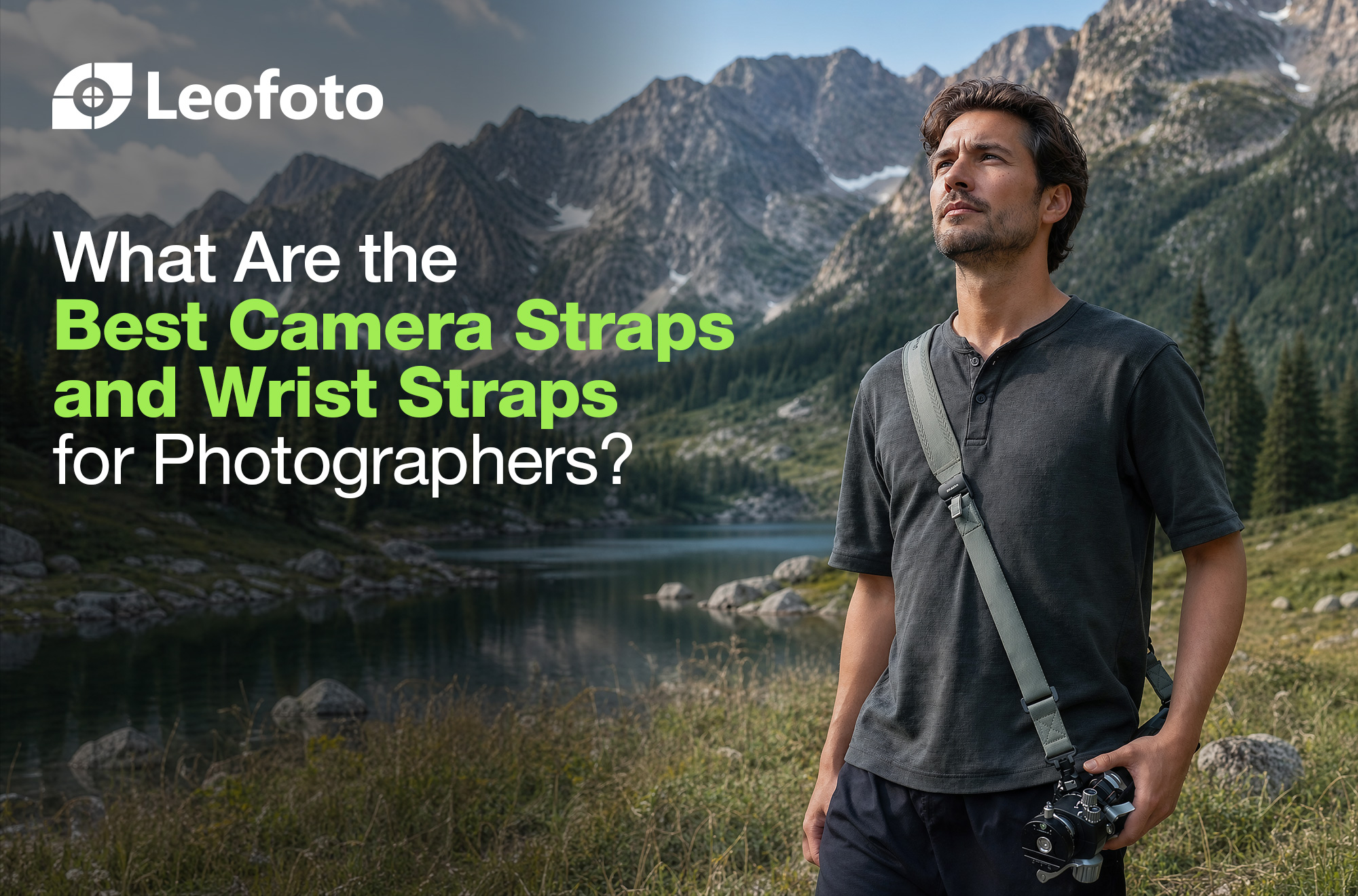
A camera strap should secure the equipment without restricting movement or creating unnecessary strain. The right design depends on camera weight, shooting duration and how often the camera moves between carrying, handheld use and tripod support.
Neck straps, sling straps and wrist straps solve different problems. Understanding their strengths and limitations makes it easier to choose a suitable carrying system.
Which Type of Camera Strap Is Best?
Neck Straps
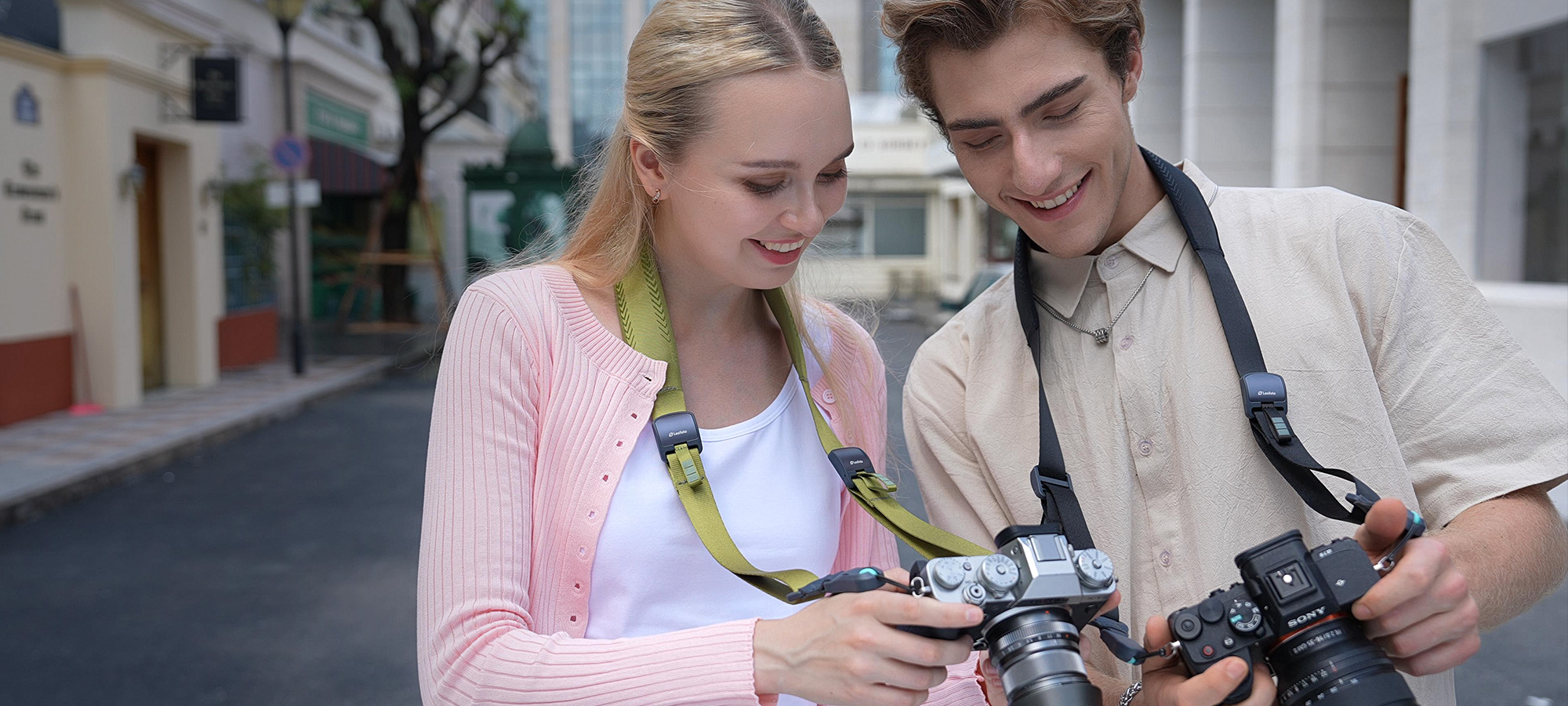
A neck strap supports the camera from two attachment points and keeps it centered in front of the body. This familiar design works well with compact cameras and lightweight mirrorless systems.
However, a narrow strap can concentrate pressure on the neck during long sessions. Photographers carrying a larger camera and lens should look for a wider strap with soft padding.
Sling Straps
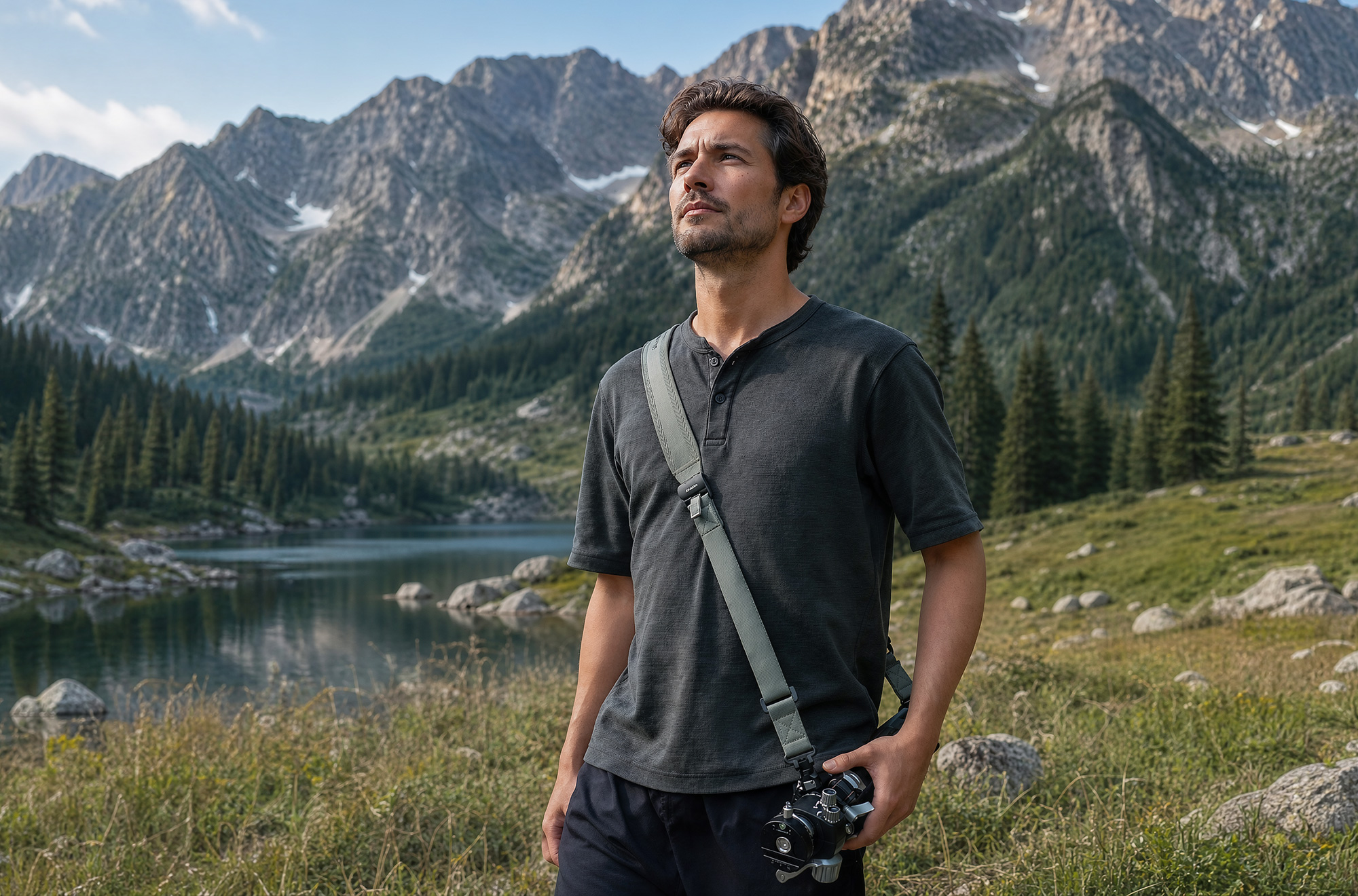
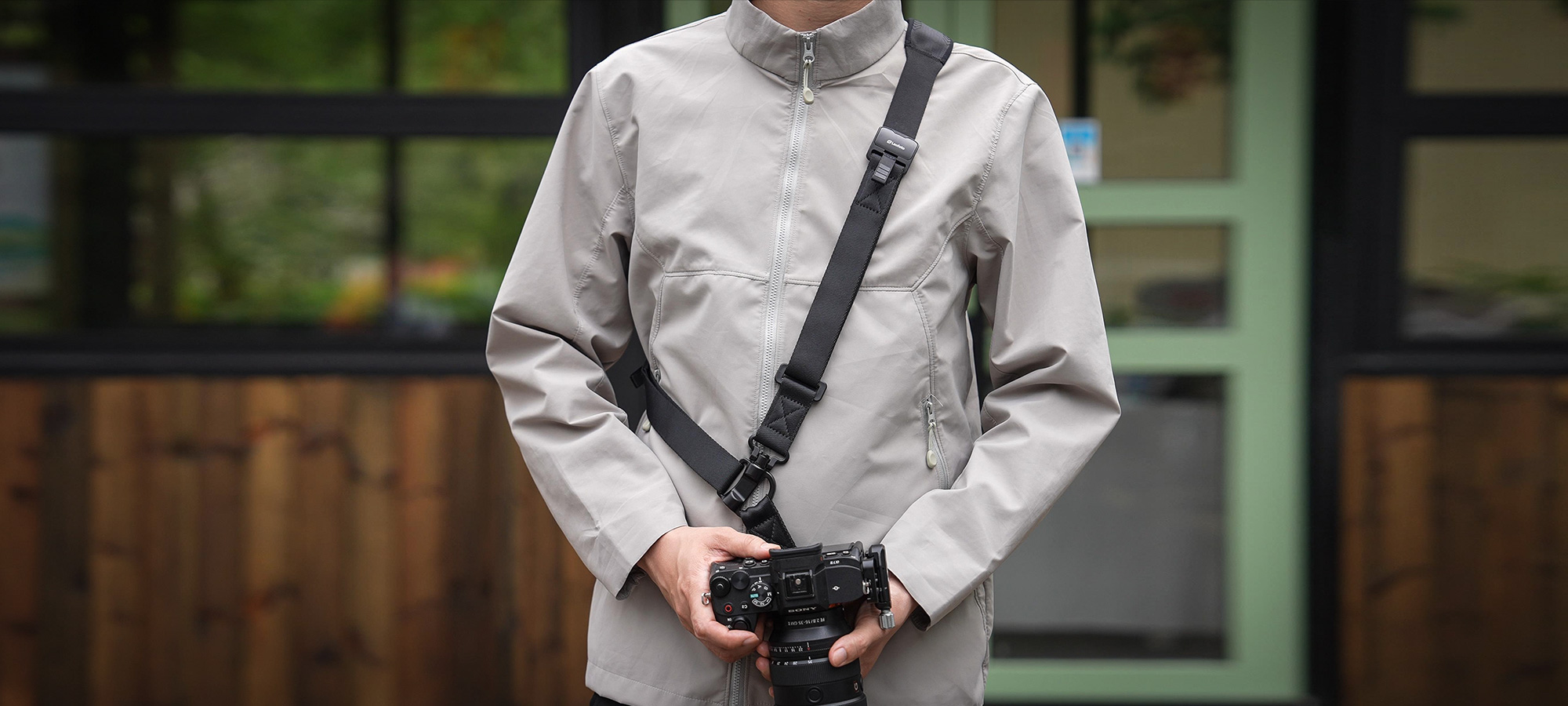
A sling strap crosses the torso and places the camera near the hip. The camera moves along the strap when the photographer raises it to eye level.
This arrangement distributes weight across the shoulder and torso. It suits event, travel and documentary photographers who carry a camera for several hours and need regular access to it.
Wrist Straps
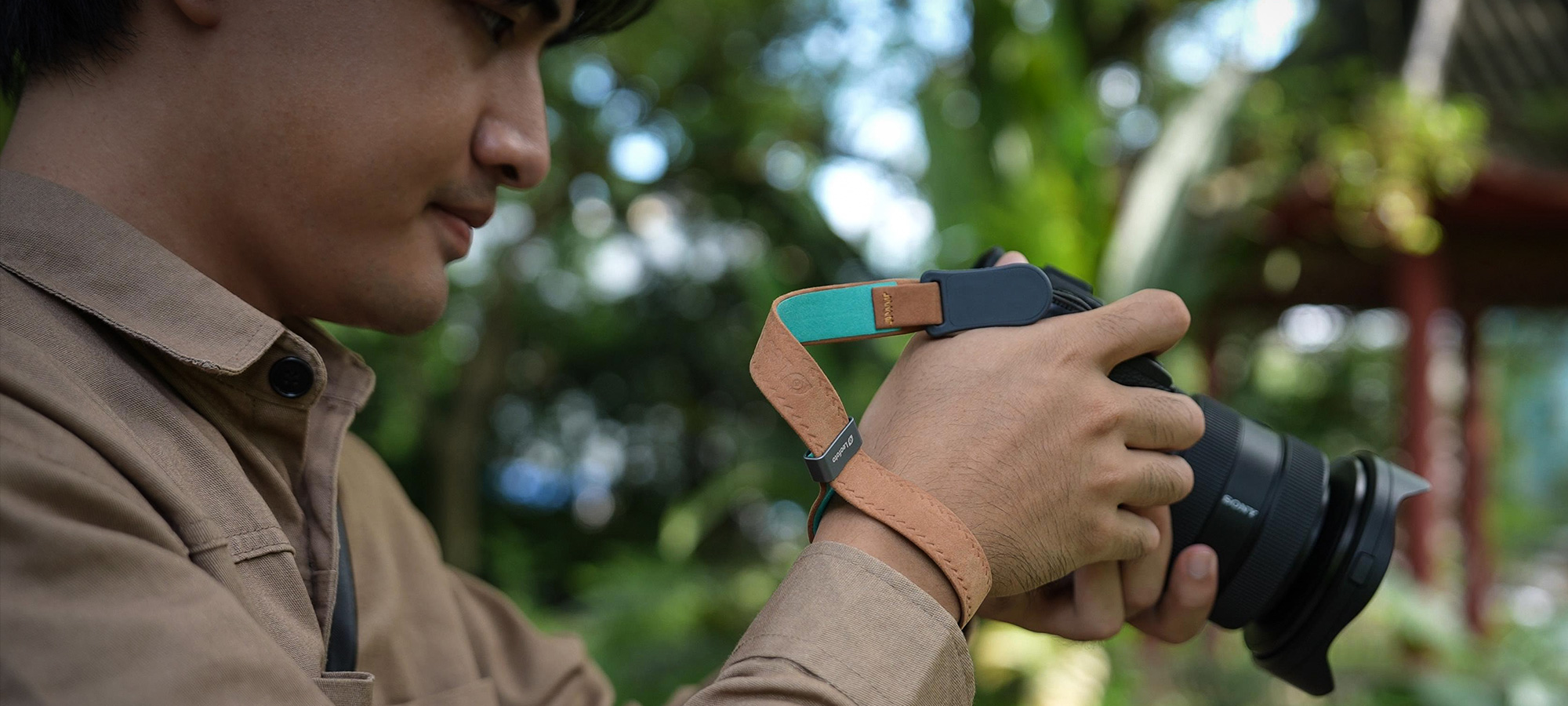
A wrist strap protects against accidental drops while the camera remains in the hand. It is compact and does not place material around the photographer’s neck or shoulder.
Wrist straps suit street photography, short assignments and situations where larger straps could interfere with movement. They do not provide hands-free carrying, so they are less practical for long events or hikes.
What Should You Look for in a Camera Strap?
Comfort and Pressure Distribution
A wider contact area spreads the camera’s weight across more of the shoulder. Padding also reduces concentrated pressure, particularly when carrying a heavy camera and lens for several hours.
Strap Length and Adjustment
An adjustable strap can be shortened while walking and lengthened before shooting. Dual-side adjustment also helps the photographer reposition the camera without removing the strap.
Materials and Construction
Polyester and nylon webbing resist abrasion and are generally easy to maintain. Rope straps are flexible and compact, although narrow rope may become uncomfortable under a concentrated load.
Microfiber and leather-style materials provide a softer contact surface. However, durability also depends on the internal reinforcement, stitching and connector design.
Load Rating and Connection Security
A connector may support far more weight than the camera itself, but the complete system is only as reliable as its weakest component. Camera lugs, anchor cords, screws, plates and stitching must all remain secure.
Are Quick-Release Camera Straps Safe?
A quick-release system allows the strap to be removed without unthreading it from the camera lugs. This is useful when placing the camera on a tripod, packing it in a fitted case or changing from a shoulder strap to a wrist strap.
Metal connectors with a positive locking action provide clear feedback when engaged. Some systems use a rotating lock, while others use a Quick Detach (QD) socket installed in a compatible camera plate.
Bottom-mounted connectors can improve balance because the camera hangs from its base instead of tilting from an upper lug. An Arca-Swiss compatible plate may also let the camera move from the strap to a tripod clamp without changing plates.
No connector is maintenance-free. Sand, dirt or a partially tightened plate can compromise an otherwise strong system. The photographer should confirm that the lock is fully engaged before lifting the camera.
How Do You Choose a Strap for Your Photography Style?
Street photographers often need a compact strap that does not restrict hand movement. A wrist strap or slim sling usually suits this type of work.
Wedding and event photographers carry equipment for several hours and change camera position frequently. A padded sling with one-handed adjustment can reduce pressure while keeping the camera accessible.
Travel photographers benefit from a strap that packs easily and works in several carrying positions. Low-profile connectors also reduce the chance of the camera catching on clothing or bag openings.
Outdoor photographers should consider bounce control, moisture exposure and the effect of gloves on small connectors. The strap should hold the camera close to the body while walking over uneven ground.
Tripod users need a design that can be removed cleanly. A loose strap can catch on equipment or move in the wind during a long exposure.
Leofoto Camera Strap and Wrist Strap Options
The Leofoto range covers wrist, sling and traditional shoulder-carrying formats. Each option addresses a different shooting situation.
- WS-02 Wrist Strap:The WS-02 uses an auto-tightening design to secure the camera around the wrist. Its quick-release connector supports frequent changes between handheld use and storage.
- SP-02 Convertible Sling:The SP-02 changes between one-point and two-point attachment. It combines dual-side adjustment with 6 mm shoulder padding and has a manufacturer-listed maximum load of 10 kg.
- L-CS-201 to L-CS-206:These straps combine microfiber, reinforced polyester webbing and rope-style adjustment. A metal connector with a 360 degree locking mechanism secures the camera.
- L-CS-207 to L-CS-210:This series adds thicker padding, dual-side adjustment and an included Arca-Swiss compatible plate. It is intended for longer sessions and heavier camera setups.
Camera Strap Safety Checklist
Before each assignment:
- Pull gently on every connection before lifting the camera.
- Check anchor cords, webbing and stitching for abrasion.
- Confirm that plates and mounting screws are tight.
- Remove sand or dirt from locking mechanisms.
- Test a new setup over a padded surface.
- Replace components that show cracking, deformation or damaged stitching.
Conclusion
The best camera strap is the one that fits the camera, the assignment and the photographer’s carrying habits. Compare attachment security, pressure distribution and adjustment before focusing on appearance.
Explore the Leofoto camera strap range to compare wrist straps, convertible slings and padded camera straps for different shooting conditions.