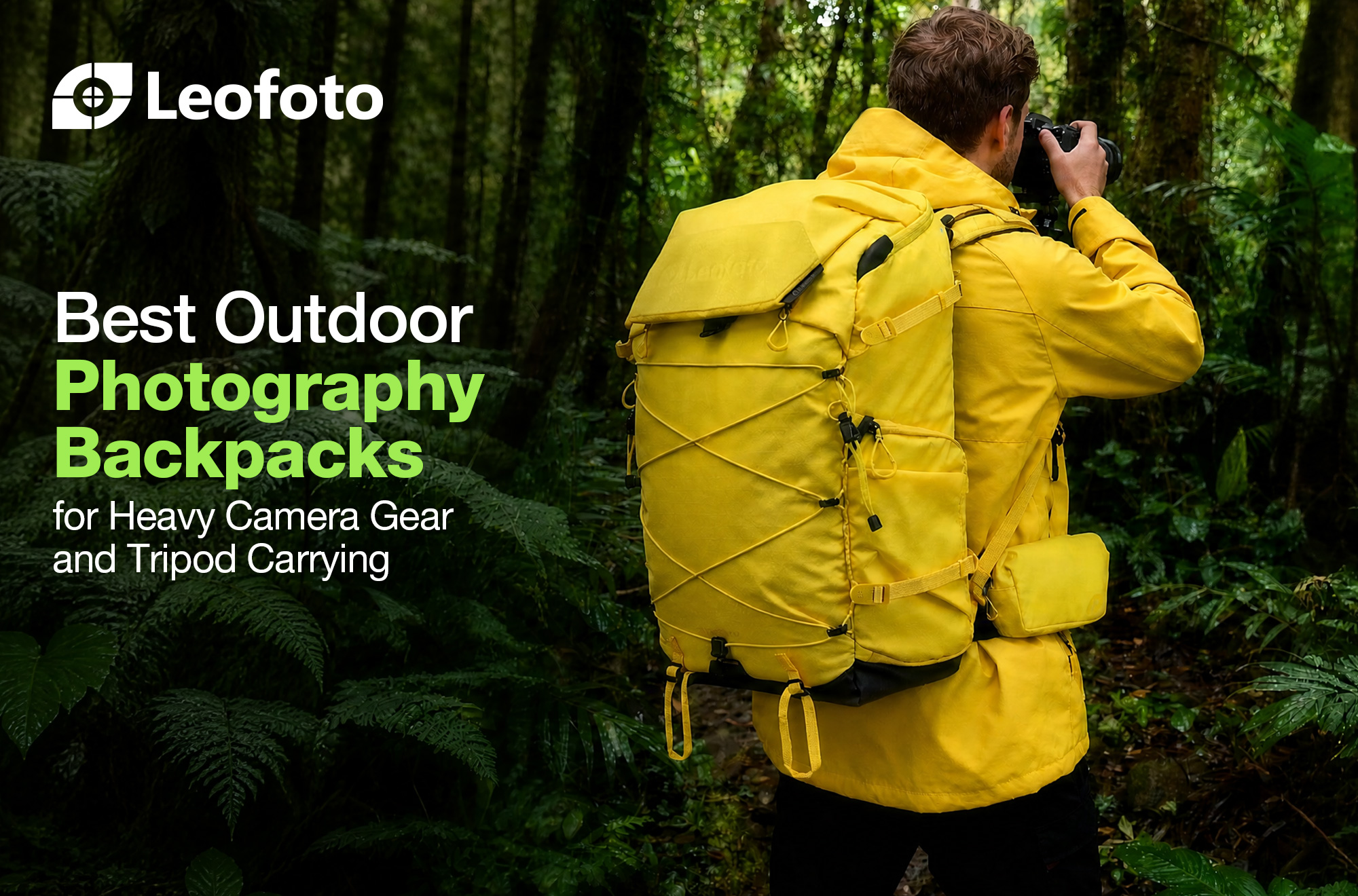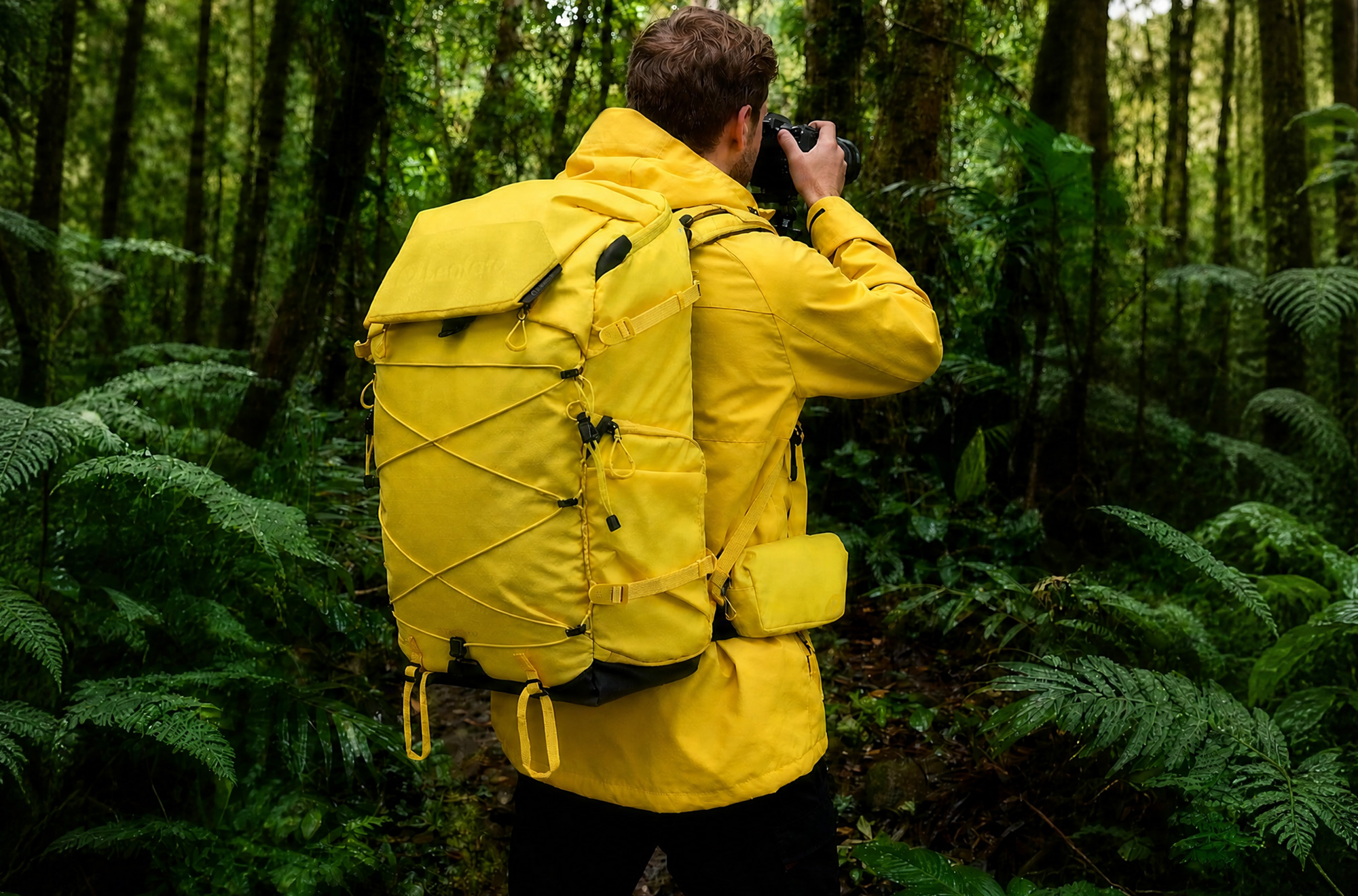
Outdoor photographers often carry a camera body, several lenses, batteries, filters, a laptop or tablet, and a tripod. Once this equipment is combined, storage capacity is only part of the problem.
A suitable outdoor photography backpack also needs to distribute weight, keep the tripod stable, protect equipment from outdoor conditions, and provide practical access during a shoot. For heavier setups, support structure and load balance matter as much as internal space.
What Makes a Camera Backpack Suitable for Heavy Gear?
A large camera backpack is not automatically suitable for a heavy professional setup. Capacity determines how much equipment fits inside, but the carrying system determines how manageable that load feels over distance.
Internal Support and Load Distribution
A structured frame helps the backpack maintain its shape and spreads pressure across a wider area of the back. Without enough support, several kilograms of camera equipment can pull directly on the shoulders.
A practical heavy-load backpack should include:
- A supportive internal frame
- Padded and adjustable shoulder straps
- A stable back panel
- Enough adjustment to keep the pack close to the body
Keeping the load close to the spine also reduces backward pull when walking on slopes or uneven ground.
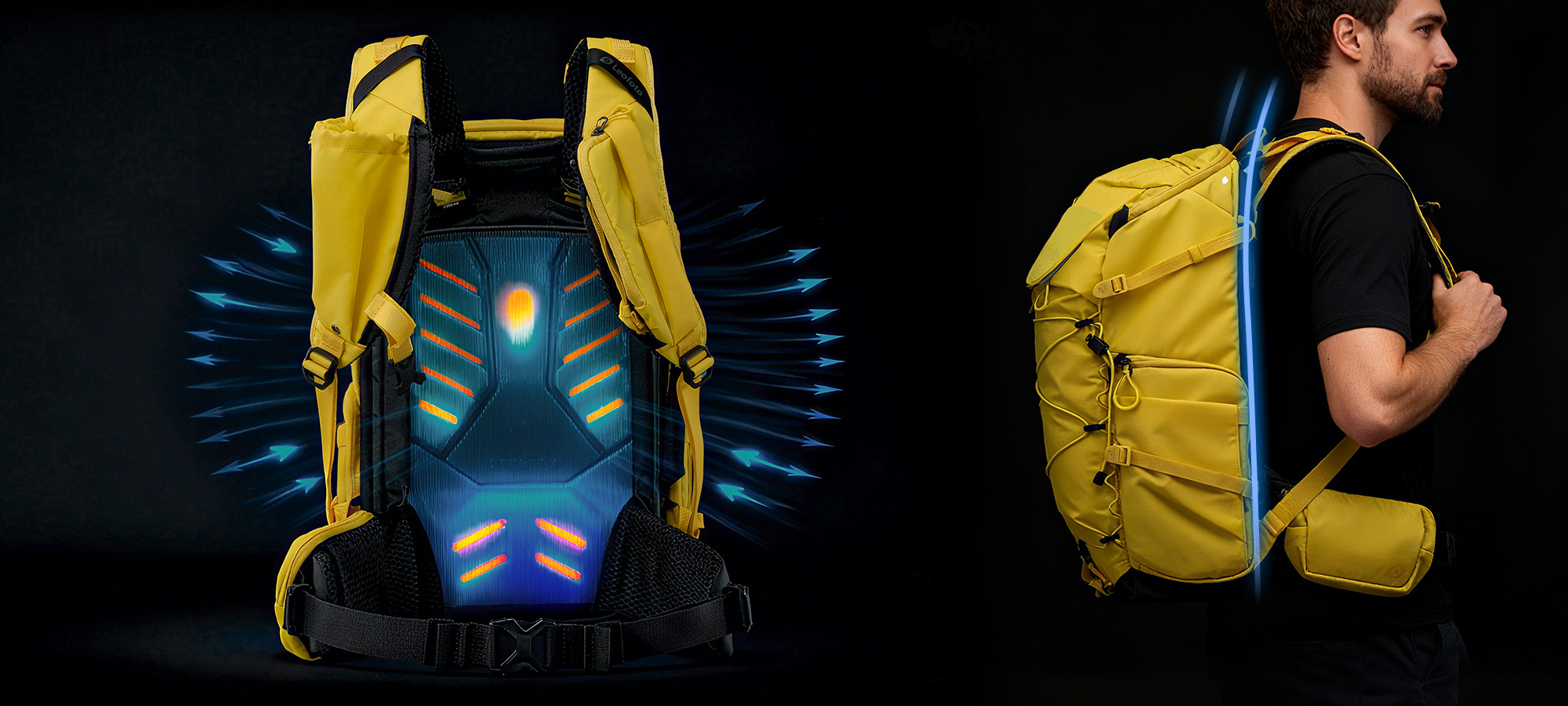
Back Ventilation and Carrying Comfort
Outdoor shoots often involve long periods of walking. For this reason, back ventilation should be considered together with padding and frame support.
Breathable mesh and separated cushioning can reduce heat buildup between the backpack and the photographer’s back. This becomes more relevant during warm-weather hikes or long landscape sessions.
Internal Organization for Heavy Equipment
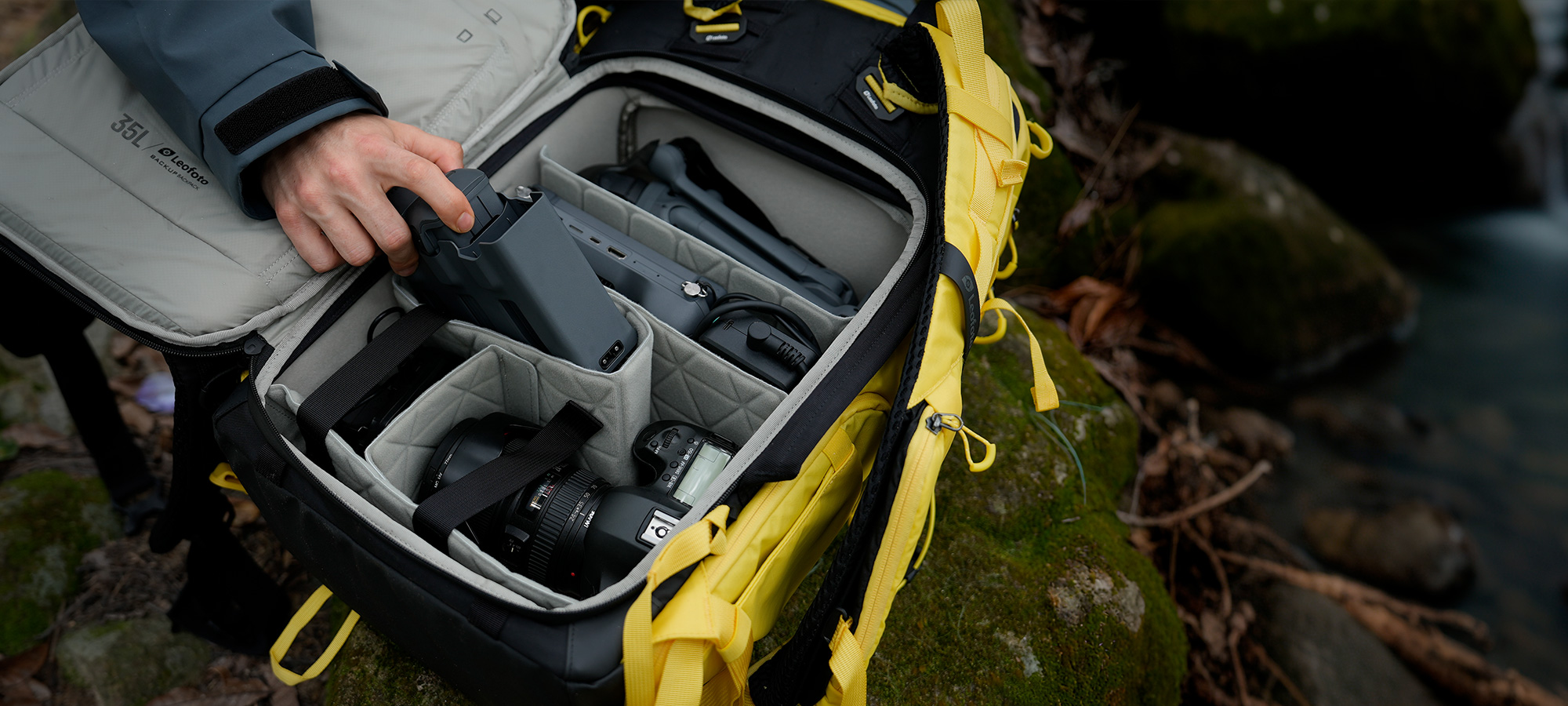
Internal dividers are not only used to separate lenses. They also help stop dense equipment from moving inside the pack.
Heavy items such as camera bodies and large lenses should remain near the back panel and close to the center of the backpack. Lighter accessories can be placed farther outward.
This packing method improves balance and reduces movement while walking.
Why Tripod Carrying Design Is So Important
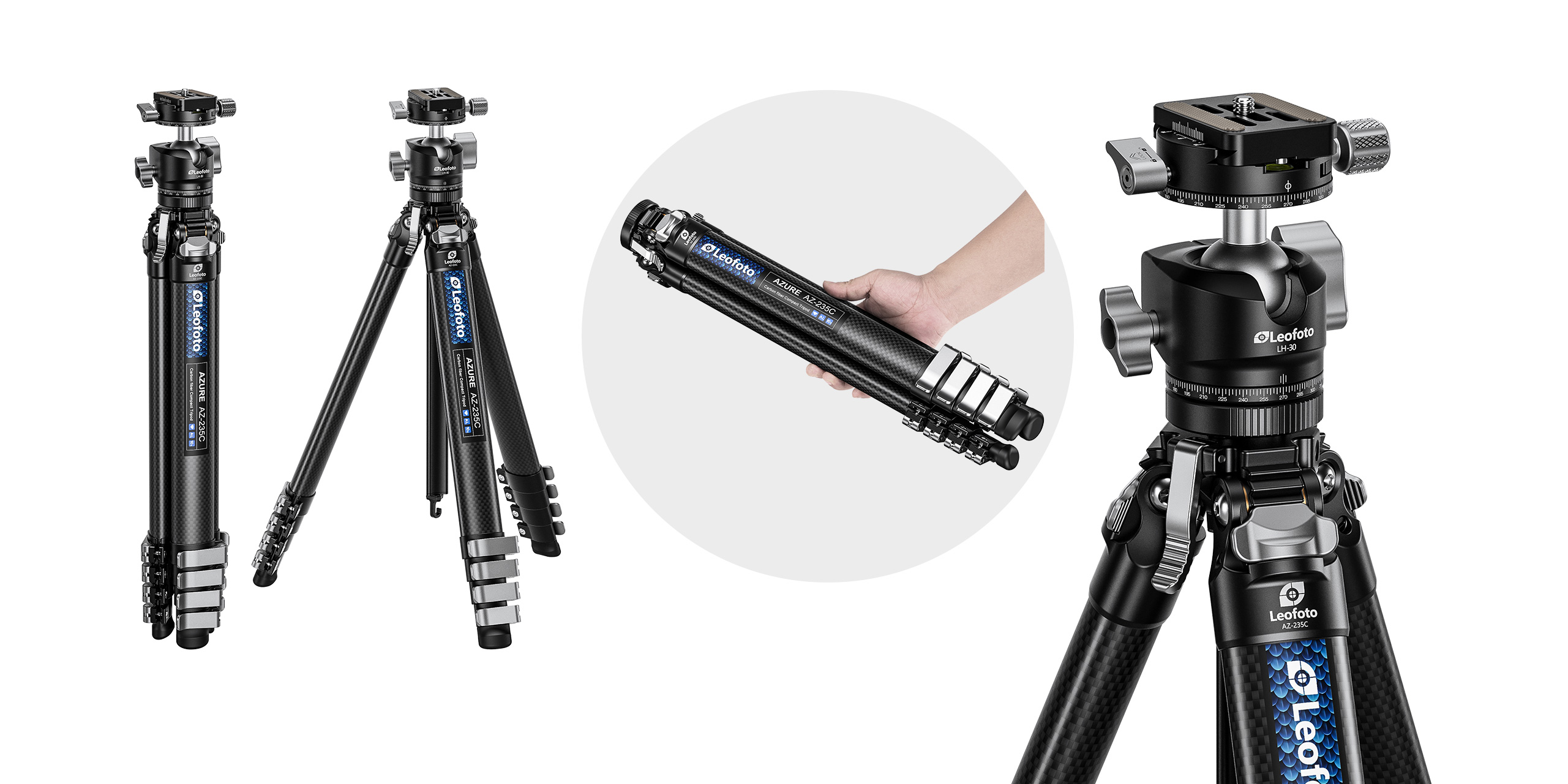
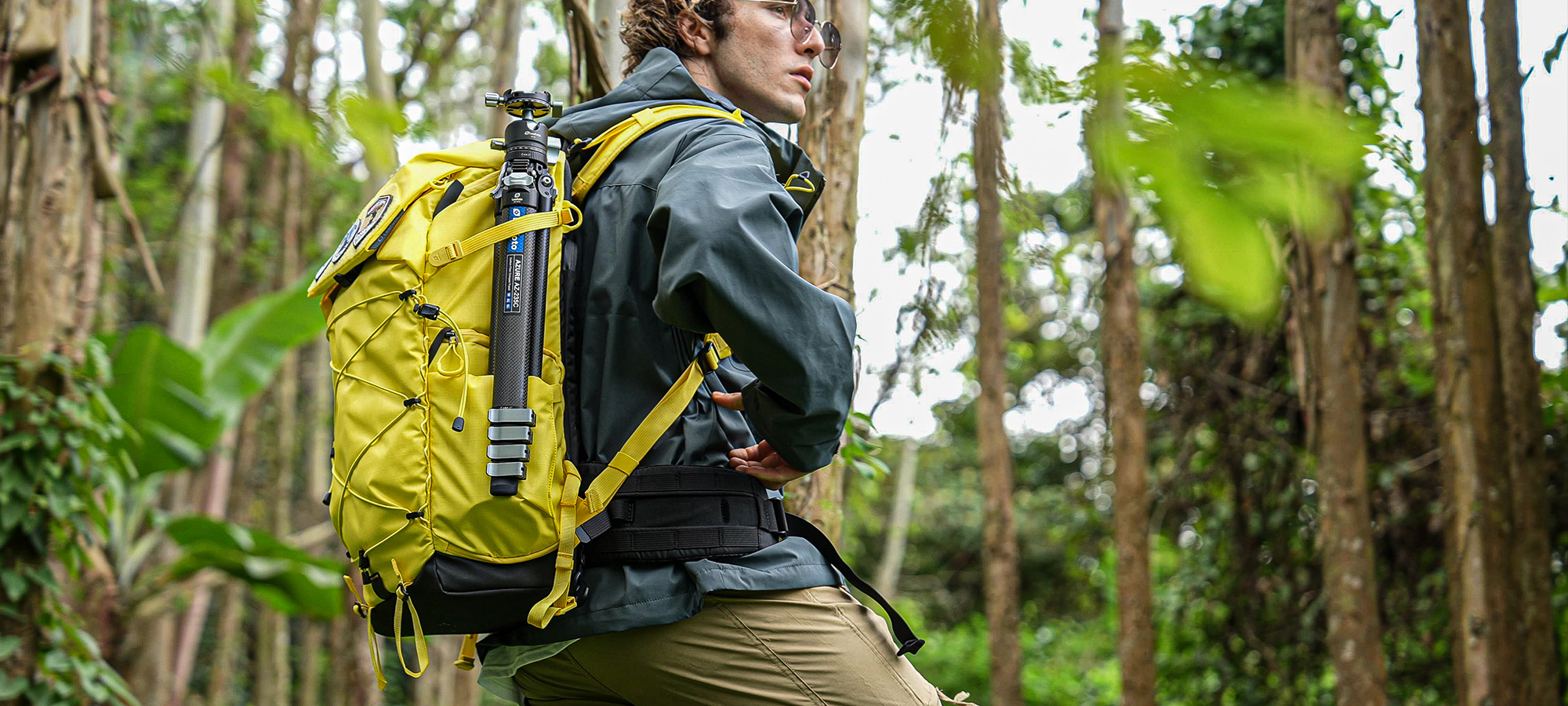
A tripod adds weight outside the main compartment, so the way it attaches to a photography backpack affects both accessibility and carrying stability.
For outdoor photographers, a side-mounted tripod is a practical solution because it keeps the tripod upright, easy to reach, and separate from the main gear compartment. This is especially useful when photographers need to set up and pack away the tripod repeatedly during a shoot. A well-designed side attachment keeps the tripod close to the backpack instead of allowing it to hang loosely away from the body.
The quality of the attachment system matters more as tripod weight increases.
A tripod that shifts or swings can make the backpack feel less stable on slopes, steps, or uneven ground. Secure straps and well-positioned attachment points help keep the tripod close to the pack and reduce unnecessary movement.
For photographers carrying larger tripods, the rest of the backpack should also provide enough structural support to manage the combined weight of the tripod and camera equipment.
Comfort and Stability for Long Outdoor Shoots
Heavy camera equipment places continuous pressure on the shoulders and back, especially during long hikes or extended outdoor shoots. For this reason, carrying comfort depends largely on how the backpack supports and distributes the load.
Structured Support for Heavy Loads
A shaped internal frame helps the backpack maintain its form under heavier loads and keeps the main compartment closer to the body.
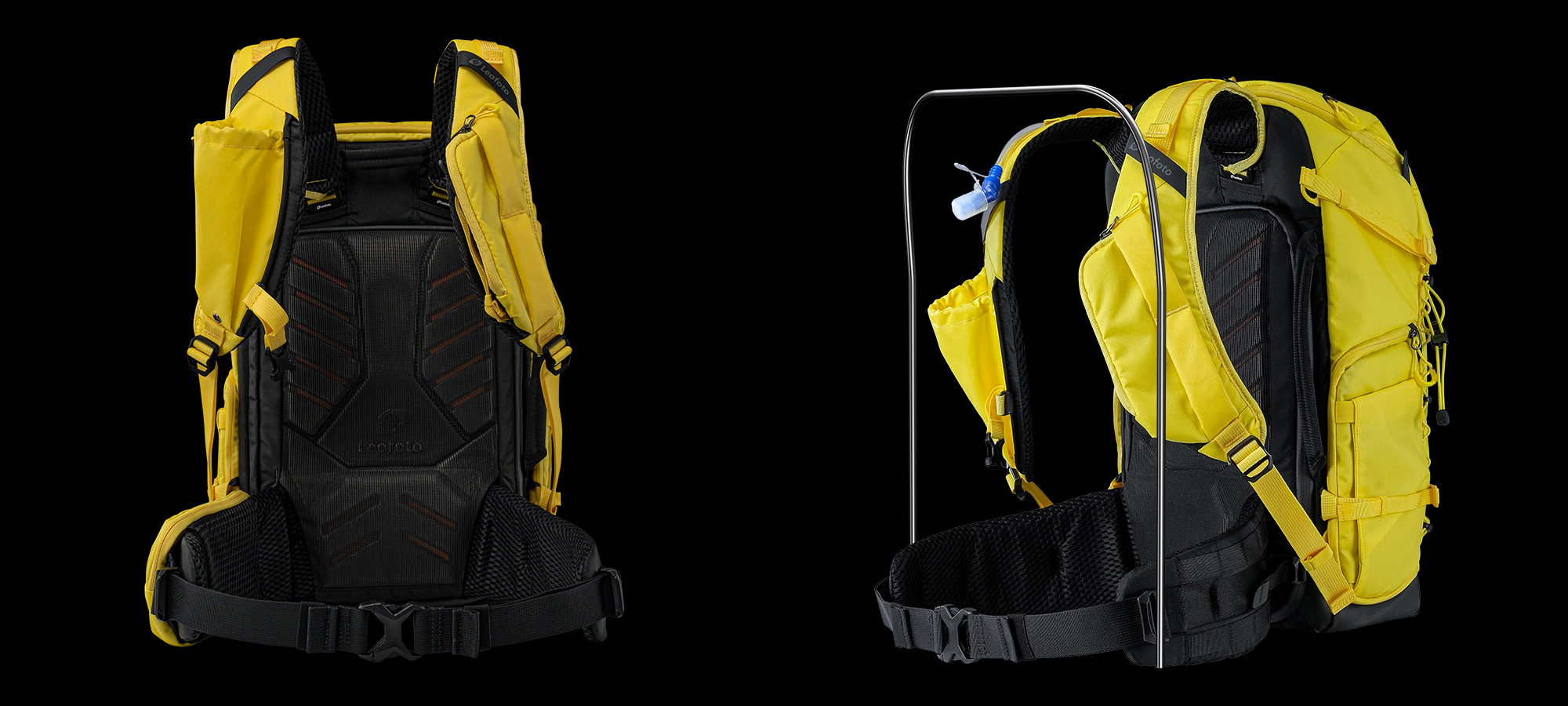
The Leofoto All in One backpacks use a 3D curved aluminum frame to provide structural support. This design helps reduce excessive backward pull when the pack is loaded with camera bodies, lenses, and a tripod.
Back Cushioning and Ventilation
Support also depends on how the backpack contacts the body.
Leofoto combines multi-layer cushioning with a high-elasticity mesh back panel. The cushioning helps distribute contact pressure, while the mesh structure improves airflow between the backpack and the photographer’s back.
This combination is particularly relevant during longer outdoor sessions, where both pressure buildup and heat can affect carrying comfort.
Adjustable Carrying System
A stable backpack should remain close to the body rather than shifting during movement.
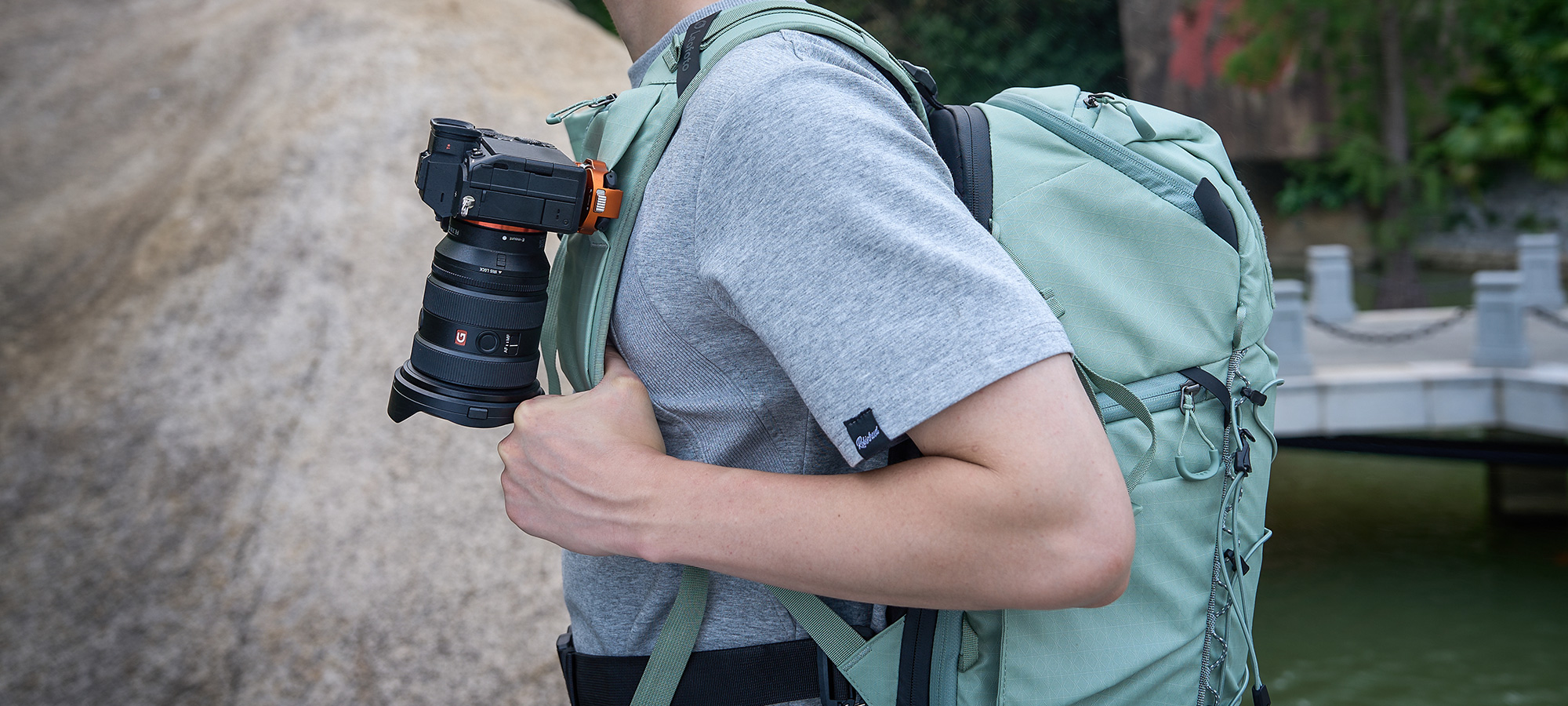
Adjustable shoulder straps and the carrying system allow the pack to be fitted more closely to different body shapes and clothing layers. A closer fit can also reduce unnecessary movement when walking on uneven terrain.
Weather Protection and Gear Access
Outdoor photography exposes equipment to rain, dust, mud, vegetation, rough ground, and repeated handling.
The outer material, base protection, and access design all affect how well the backpack performs in these conditions.
Materials and Base Protection
Water-resistant fabric provides a useful first layer of protection against light rain and wet surfaces.
A polyurethane coating, commonly shortened to PU, can improve moisture resistance and make the fabric easier to clean.
However, water resistance should not be confused with complete waterproofing. Photographers working in sustained rain should also consider zippers, seams, openings, and any additional rain cover.
The bottom of the backpack also deserves attention. Photographers frequently place bags on soil, stone, or wet ground while setting up a tripod. A reinforced base can reduce wear and provide additional protection for equipment stored near the bottom.
Quick Access During a Shoot
Side and top access points allow photographers to remove a camera without fully opening the main compartment.
This is useful when stopping briefly on a trail or when there is not enough space to place the backpack flat on the ground.
Quick access is especially practical for photographers who frequently change shooting positions.
Full Opening for Gear Organization
A full opening serves a different purpose. It provides a clear view of the equipment layout and makes it easier to change lenses, reorganize dividers, or check that all equipment has been packed before leaving a location.
For outdoor photography, a combination of smaller access points and a full opening is often more useful than relying on one opening style for every situation.
Best Leofoto Backpacks for Heavy Outdoor Photography
Leofoto offers 25 liter and 35 liter versions of its All in One Travel and Photography Camera Backpack. Both models focus on load support, outdoor protection, ventilation, and practical access for photographers carrying substantial gear.
Leofoto All in One 35L Backpack
The 35 liter model is designed for photographers who need more carrying capacity for longer outdoor shoots. Key features include:
- 3D curved aluminum frame with multi-layer cushioning for structural support and pressure distribution
- High-elasticity mesh back panel for improved ventilation during extended carrying
- 420 denier ballistic nylon with PU coating for resistance to rain, dust, and scratches
- Quick side and top access for reaching camera gear without opening the entire pack
- Adjustable straps designed to fit users from 150 cm to 190 cm in height
Leofoto All in One 25L Backpack
The 25 liter model uses the same core support system in a more compact format, making it suitable for photographers who want to reduce overall pack size.
Key features include:
- 3D curved aluminum frame designed to follow the spine and distribute pressure
- High-elasticity mesh back pad for heat dissipation and sweat management
- 180 degree full-opening design for complete access to the camera compartment
- Side, top, and internal access points for different shooting situations
- 420 denier ballistic nylon with PU coating with a water-repellent finish
- One-button hydration setup for outdoor use, with bladder and straw purchased separately
Choosing an outdoor photography backpack for heavy equipment requires more than checking capacity. A suitable backpack should provide structural support, stable tripod attachment, practical weather protection, and access points that work in real outdoor conditions. Explore Leofoto outdoor camera backpacks to find the right balance of support, tripod carrying, and gear protection for your next shoot.