Camera gear is dense, fragile and heavy for its size, which means a bag’s padding, load distribution and opening design directly affect how well the equipment survives transport. Because workloads differ, no single bag suits every user. This guide explains the five features that determine a camera backpack’s performance, and how common bag styles compare, so you can choose based on your own equipment and conditions.
What Makes a Camera Backpack “Best” for Professional Photography Equipment?
The best camera backpack protects your gear, keeps it within reach, and stays comfortable for a full shoot day. No single bag wins on every point, so the real task is matching the bag to your workload. The criteria below let you do that.
Why Does a Generic Backpack Fail Professional Gear?
A generic backpack fails because nothing holds your professional photography equipment in place. Bodies and lenses knock against each other, and one bump on a train platform lands directly on the glass.
Dedicated camera bags solve this with padded compartments, customizable dividers, and weather-resistant materials. As a result, the same kit survives a commute that would scuff it in an ordinary pack.
Why Is the Camera Backpack Market Growing?
Demand is rising because more people shoot for a living and travel with expensive kit. Fortune Business Insights valued the global camera bag market at USD 2.35 billion in 2025 and projects USD 4.23 billion by 2034. The report links this growth to adventure tourism, wildlife photography and travel blogging.
Metric | Figure |
2025 global camera bag market | USD 2.35 billion |
2034 projection | USD 4.23 billion |
Forecast compound annual growth rate (CAGR) | 6.76% |
What Features Should You Check Before Buying a Camera Backpack?
Check five things: capacity, protection, access, comfort and security. Each one has a question you can answer from a spec sheet or a sample.
Feature | Question to Ask | What to Verify |
Capacity | Does it hold my full kit? | Internal dimensions in mm, volume in liters (L) |
Protection | Will it survive rain and knocks? | Fabric, padding, base construction |
Access | Can I reach a lens mid-shoot? | Side, top, rear or full-open design |
Comfort | Can I wear it all day? | Frame, harness, back ventilation |
Security | Can someone open it unseen? | Zipper design, hidden pockets |
How Much Capacity Do You Actually Need?
You need space for everything you carry, plus a small margin. Photography News advises adding up your bodies, lenses and accessories, then choosing storage that matches or slightly exceeds that total.
For example, if your team shoots with two bodies, three lenses and a drone, measure that kit first. Then compare it with the bag’s internal dimensions, not just its liter rating.
How Much Protection Is Enough?
Match protection to your worst typical day. A bag that is “water-resistant” is not the same as one that is waterproof, so confirm which claim the maker actually makes.
Materials also tell you a lot. An Alibaba sourcing guide says nylon denier (D, a measure of thread thickness) indicates abrasion resistance, and YKK zippers signal zipper quality.
Which Access Style Fits Your Workflow?
Side access suits shooters who swap lenses often, while rear access suits crowded places. Photography News notes that side access lets you reach gear without putting the bag down, whereas rear access can’t be opened while the bag is worn.
What Makes a Backpack Comfortable on Long Shoots?
Comfort comes from a supportive frame, an adjustable harness and a ventilated back panel. This matters because camera gear weighs significantly more than typical backpack contents. On a four-hour location shoot, poor weight distribution shows up as fatigue.
Which Camera Bag Style Fits Which Team or Use Case?
Backpacks suit most mixed workloads, while slings, shoulder bags and rolling bags win in narrower situations. The table shows the trade-offs.
Style | Strength | Trade-Off | Best For |
Backpack | Capacity, weight spread, protection | Slower access if you must remove it | Travel, location shoots |
Sling | Swings to the front for quick access | Suits lighter kits | Short outings |
Shoulder bag | Quickest access via a press-top flap | Load sits on one shoulder | Events, street work |
Rolling bag | Wheels and a retractable handle for bulky gear | Less suited to uneven terrain | Studio, airport |
Backpack vs. Sling vs. Shoulder Bag: What Are the Trade-Offs?
Choose by how often you reach for gear versus how much you carry. Photography News says a sling moves to the front of your body for quick access, and a press-top shoulder bag is the ultimate in speedy access. A backpack gives up some of that speed in exchange for capacity and weight distribution.
Which Style Suits Travel, Commuting or Field Work?
Match the style to the daily routine:
- Travelersneed one bag for a camera, laptop and tripod.
- Commutersneed a bag that works as an everyday pack.
- Field teamsneed rugged fabric and weather protection.
Is the Leofoto All-in-One Travel & Photography Camera Backpack Worth Considering?
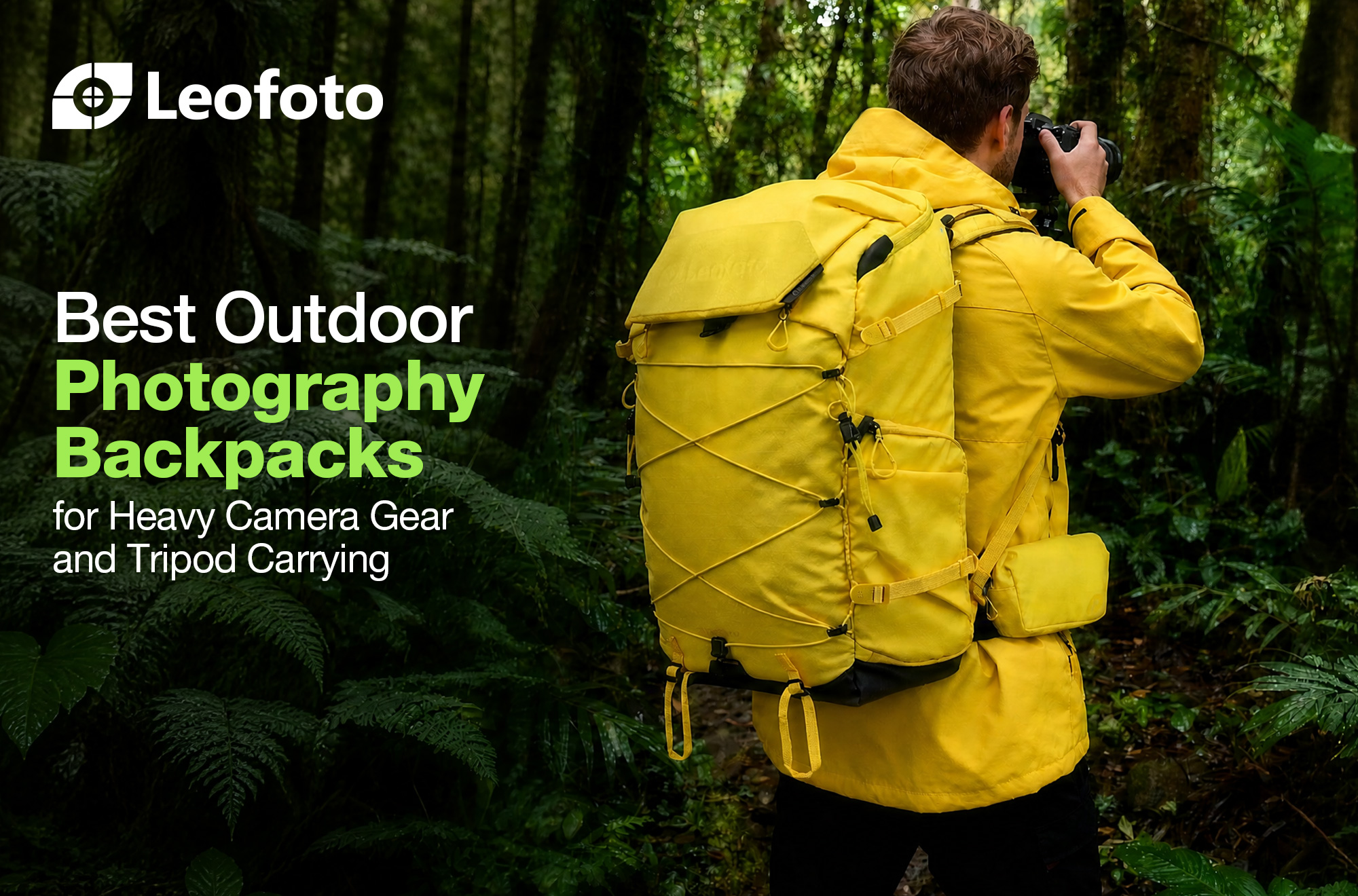
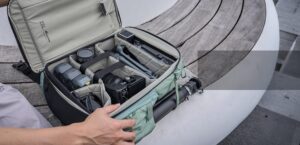
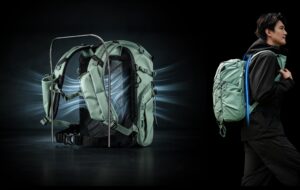
Yes, if your team wants one 25L bag that carries camera gear, a laptop and a tripod. Leofoto designs tripods, video supports and other support systems for photographers and film crews. Its camera bag range extends that line.
The Leofoto All-in-One Travel & Photography Camera Backpack is a 2026 release designed for photographers, commuters and travelers.
What Are the Key Specifications?
The bag comes in three configurations that differ only by insert:
Model | OPA-25B (Bag) | OPA-25B-MI (Medium Insert) | OPA-25B-LI (Large Insert) |
Weight | 1.7 kg | 2.2 kg | 2.5 kg |
Volume | 25L | 25L | 25L |
External dimensions | H480 x W335 x D240 mm | H480 x W335 x D240 mm | H480 x W335 x D240 mm |
Insert dimensions | N/A | 315 x 290 x 160 mm | 415 x 290 x 160 mm |
All three come in black, yellow or green and are listed as water repellent. Other features from the product page:
- Fabric:420D ballistic nylon with a polyurethane (PU) coating, a thickened base and a removable EVA (ethylene-vinyl acetate) cushioning layer.
- Carry system:a 3D curved aluminum frame, mesh back panel and straps that fit heights from 150 to 190 cm.
- Access:a 180° lay-flat opening plus side, top and internal access.
- Contents:fits cameras, lenses, drones, a 13.5″ laptop, an iPad, a tripod and trekking poles.
- Security:anti-theft zippers and a hidden AirTag pocket.
- Extras:YKK zippers, a trolley sleeve, lash points, and a one-button hydration setup (bladder not included).
Who Is This Backpack For, and Who Should Look Elsewhere?
It fits travelers and commuters who need to separate camera gear from personal items. Dual compartments keep the two apart.
Look elsewhere if you need more than 25L or a confirmed waterproof rating, because the page says “water repellent” and states no waterproof rating. Leofoto also lists a 35L version of this series for larger kits.
Conclusion: So, What Is the Best Camera Backpack for Your Needs?
The best camera backpack is the one that fits your measured kit, matches your weather, and opens the way you shoot. Start with your gear list, then test each bag against the five features above.
Before you decide, run this checklist:
- Measure your full kit in millimeters.
- Pick the access style that suits your shooting routine.
- Confirm the weather-protection claim in writing.
- Test the carry system fully loaded.
If your needs match the profile above, the Leofoto 25L backpack is worth a closer look.